Pagina 3 - Equi-infos
- - Januari 10, 2026 92
Un nouvel outil essentiel dans l'arsenal thérapeutique des vétérinaires équins
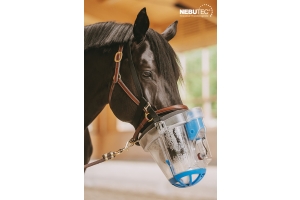
Améliorer la qualité de l'air autour des chevaux de compétitions peut contribuer à atténuer ou à réduire les symptômes de l'hémorragie pulmonaire induite par l'effort (HPIE) en diminuant l'inflammation des voies respiratoires causée par des irritants environnementaux tels que la poussière, l'ammoniac et les particules fines.
Les options de traitement des problèmes respiratoires chez les chevaux de compétition sont limitées : les traitements antibiotiques, anti-inflammatoires et expectorants, même administrés par nébuliseur, peuvent induire une résistance aux antibiotiques et/ou une immunosuppression. De plus, la plupart de ces produits sont interdits, à juste titre, pendant les périodes de compétition.
Créer un environnement plus propre et plus sain grâce à une meilleure ventilation, un contrôle de la poussière et une purification de l'air peut favoriser la santé respiratoire et réduire le risque de complications
- - December 03, 2025 117
Biofresh est un agent d'assainissement de l'air et des surfaces conçu pour réduire l'exposition aux polluants contribuant aux irritations respiratoires, aux odeurs, à la charge allergénique et à l'activité microbienne.
Son action repose sur un mécanisme non-biocide et non désinfectant, basé sur les cucurbiturils, une technologie d'inclusion supramoléculaire.
Biofresh ne « tue » pas les micro-organismes ; il neutralise, capture et désactive les polluants par séquestration physique et chimique.
- - November 14, 2025 122
Les désinfectants conventionnels protègent uniquement les surfaces et pour une courte durée.
Biofresh ajoute la couche de protection de l'air manquante, ce qui devient crucial pendant l'hiver (du 4e trimestre à la fin du 1er trimestre) et s'inscrit dans les objectifs de réduction des résidus et d'utilisation plus sûre.
- - November 14, 2025 58
Conventional disinfectants protect surfaces only and for short periods. Biofresh adds the missing airspace protection layer, which becomes materially more important during winter - Q4 to end of Q1 , and aligns with reduced-residue, safer-use objectives.
- - November 03, 2025 92
Claims of multi-week antimicrobial persistence from QAC-based disinfectants are marketing exaggerations not supported by independent evidence or by regulatory definitions of residual efficacy.
BioFresh provides a verifiable, compliant, and non-toxic alternative that prioritises safety, validated performance, and regulatory integrity.Les allégations de persistance antimicrobienne de plusieurs semaines pour les désinfectants à base d'ammonium quaternaire sont des exagérations marketing non étayées par des preuves indépendantes ni par les définitions réglementaires de l'efficacité résiduelle.
BioFresh offre une alternative vérifiable, conforme et non toxique qui privilégie la sécurité, la performance validée et le respect de la réglementation. - - Oktober 30, 2025 139
C'est la saison des virus !
Comme le réseau RESPE le rappelle, le Syndrome Respiratoire peut être causé par de multiples agents infectieux entraînant des signes cliniques identiques : forte augmentation de température (hyperthermie ou fièvre), jetage, toux.
Soyez pro-actif: utilisez Biofresh !
- - Oktober 30, 2025 98
It's virus season!
As the RESPE network reminds us, Respiratory Syndrome can be caused by multiple infectious agents leading to identical clinical signs: a sharp increase in temperature (hyperthermia or fever), nasal discharge, and coughing.
Be proactive: use Biofresh!
- - Juli 15, 2025 228
Sachez que les étalons descendants du chromosome Y des étalons arabes Godolphin et Byerley Turk seront bientôt éteints, ne laissant que les descendants de la lignée mâle de Darley Arabian comme géniteurs des futurs chevaux pur-sang. Quelles sont les conséquences génétiques probables de la reproduction d'une seule lignée mâle active du chromosome Y chez les pur-sang ?
Conséquences génétiques d'une lignée paternelle à chromosome Y unique chez les pur-sang
Contexte : Lignées paternelles fondatrices et héritage paternel
Les chevaux de course pur-sang tirent leur pedigree en ligne mâle directe de l'un des trois étalons fondateurs importés en Angleterre à la fin du XVIIe et au début du XVIIIe siècle. Ces fondateurs –Darley Arabian, Godolphin Arabian et Byerley Turk – ont établi les lignées paternelles originales de la race. Cependant, au fil du temps, la domination de la lignée du Darley Arabian (par l'intermédiaire de son célèbre arrière-arrière-petit-fils Eclipse) a largement éclipsé
- - Juli 15, 2025 1086
Consider that the Y Chromosome descendant stallions of the Godolphin Arabian and Byerley Turk Stallions will soon be extinct, leaving just the male line descendants of the Darley Arabian present as sires of future Thoroughbred horses. What is the likely genetic consequences of having just one active Y Chromosome male line being reproduced in the Thoroughbred breed?
Genetic Consequences of Single Y Chromosome Line in Thoroughbreds by John Ryan (Melbourne- Autralia)
Genetic Consequences of Single Y-Chromosome Sire Line in Thoroughbred Horses
Background: Foundation Sire Lines and Paternal Legacy
Thoroughbred racehorses trace their pedigree in direct male line (tail-male) to one of three foundation stallions imported to England in the late 17th and early 18th centuries 1. These founders - the Darley Arabian, Godolphin Arabian, and Byerley Turk - established the original sire lines of the breed. Over time, however, the dominance of the Darley Arabian's lineage (through his famed great-great-grandson
- - Juni 18, 2025 152
Every space you enter, whether it be, at the coffee shop, at the gym, on your desk, on your commute, is covered with living germs and viruses (Pathogens). You cannot see them, but they are there, and they are spreading from surface to surface and through the air at an alarming rate. At Safer Space®, we understand the importance of tackling these germs and viruses methodically and efficiently to ensure public health and safety.
Chaque espace que vous fréquentez, que ce soit au café, à la salle de sport, à votre bureau ou sur votre trajet, est infesté de germes et de virus vivants (agents pathogènes). Invisibles, ils sont pourtant bien là et se propagent de surface en surface et dans l'air à une vitesse alarmante. Chez Safer Space®, nous comprenons l'importance de lutter méthodiquement et efficacement contre ces germes et virus afin de garantir la santé et la sécurité publiques.