

An ultra-fine saline mist to moisturize, thin secretions and help clear the airways.
MASK-FREE EQUINE NEBULIZER · OXYGEN · NEGATIVE IONIZATION
Your horses have a spa appointment. Right at the stable.
The EQUANDLAB Respiratory Care Room is a mask-free equine nebulizer space for sport and racehorses, combining saline nebulization, oxygen-enriched air and negative ionization in one dedicated stable area.
During the session
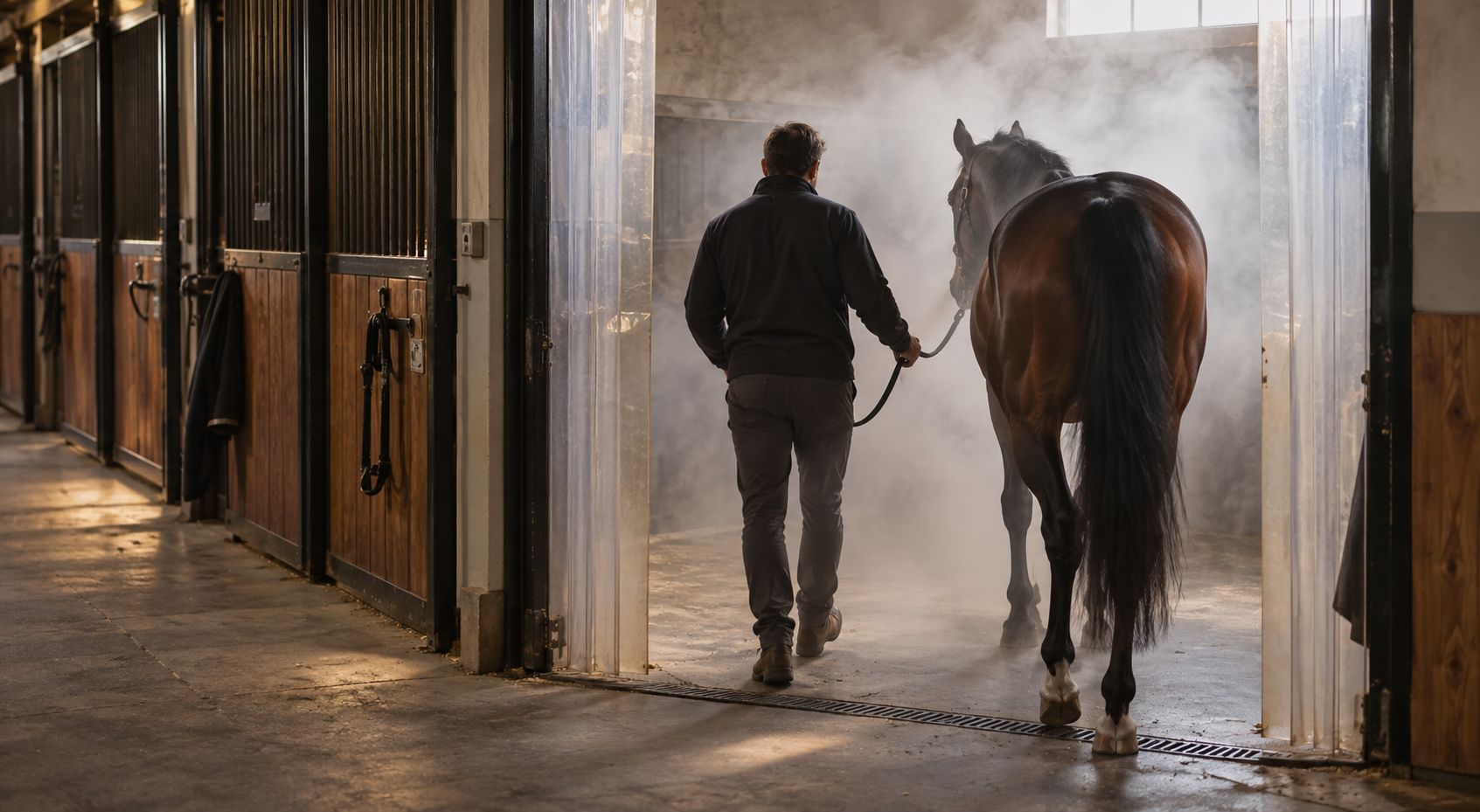
The horse enters. Nothing on its head. Around it, three processes begin.
During the session, the horse breathes air that is richer in oxygen than ambient air.
Negative ionization helps certain dust particles settle rather than remain suspended around the horse.
Racing stables· Show jumping· Eventing· Dressage· Endurance· Sport horses· Private stables· Training centers· Sport and sales yards·
01 · Daily respiratory function
A horse's respiratory system is under strain well beyond exercise.
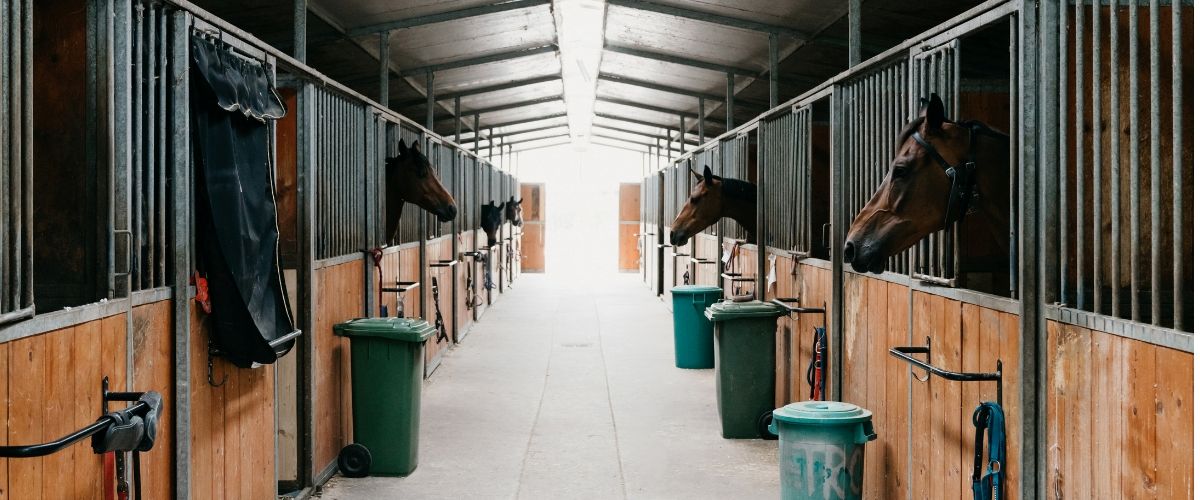
- 07:00Hay · stalls · sweeping
Haying, bedding and mucking out can stir particles back into the air.
- 10:00Work
During exercise, respiratory demands increase.
- 14:00Transport
Races, competitions and training camps can mean several hours in a horsebox.
- 18:00Back in the stall
Occasional coughing, mucus, longer recovery and reduced performance are all signs that should not be ignored.
≈ 100 000liters of air per day
100,000 liters of air. Every day. Even before considering exercise.
A horse at rest can already breathe in more than 100,000 liters of air in a day. During exercise, the volume of air breathed increases significantly.
EQUANDLAB source: See “Preventing respiratory problems”90% up to
Mild to moderate asthma is far from marginal in sport horses.
In certain populations of racehorses, veterinary literature reports prevalence rates approaching 80 to 90%, depending on the population and criteria studied.
Racehorses
Then there is “bleeding”.
Exercise-induced pulmonary hemorrhage (EIPH) is a respiratory condition closely monitored in racehorses. It requires specific veterinary follow-up. In this context, the Respiratory Care Room provides a dedicated solution to support the daily respiratory monitoring of affected horses, around training and recovery.
Coughing, mucus, less clean-cut recovery… Respiratory health deserves a place among the stable's priorities.
Understand respiratory problems ↗02 · The EQUANDLAB concept
One mask-free equine nebulizer space. Three complementary technologies.
The EQUANDLAB Respiratory Care Room brings together in a single session saline nebulization, oxygen-enriched air and negative ionization, in a space sized to concentrate the effects of the three technologies while giving the horse enough room to keep its head free.
Three complementary actions to put the horse in good condition to breathe, work and recover.
More O₂ available
During the session
Equi-Info · Oxygen before exercise →Helping clear the airways
Moisturizing, thinning and mobilizing secretions
Supporting recovery
After work, training or competition
Equi-Info · Oxygen after exercise →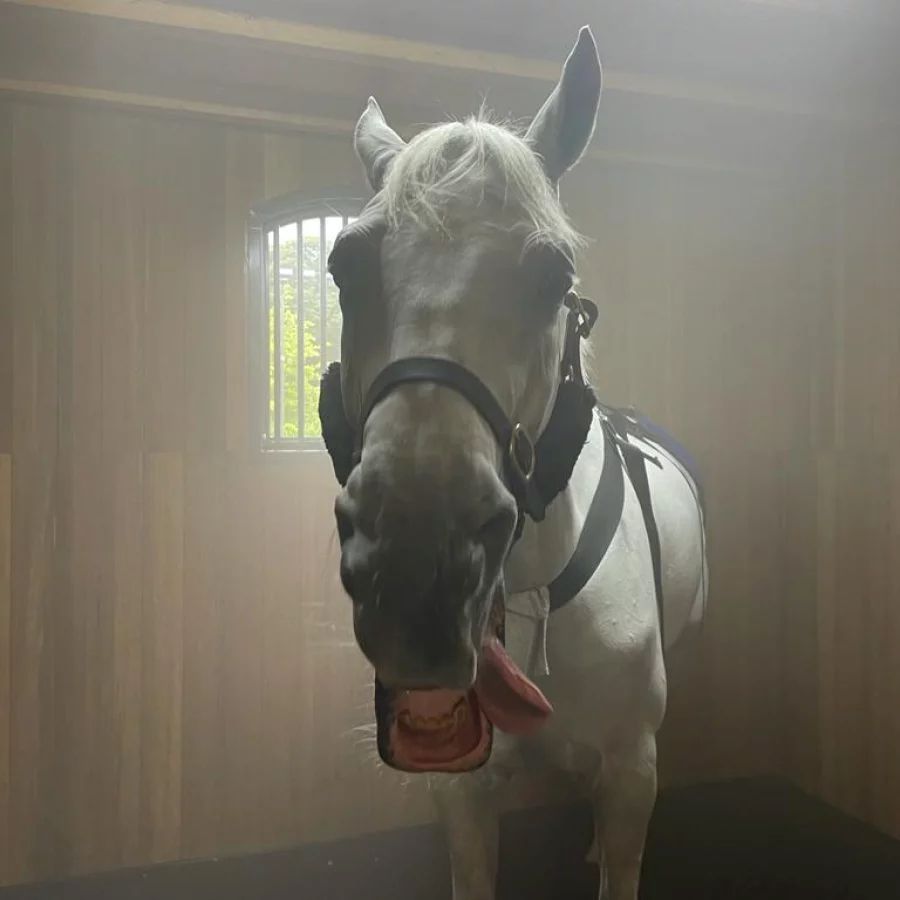 Free head · Reduced stress
 MASK OR MASK-FREE?
Equine inhaler or mask-free nebulizer space?
Traditional equine inhaler / nebulizer mask
A device is fitted to the horse's head and delivers the aerosol around the muzzle.
EQUANDLAB mask-free system
The saline aerosol is diffused throughout a dedicated stable space. No nebulizer mask is fitted to the horse.
More than a horse inhalation room: three technologies in one space.
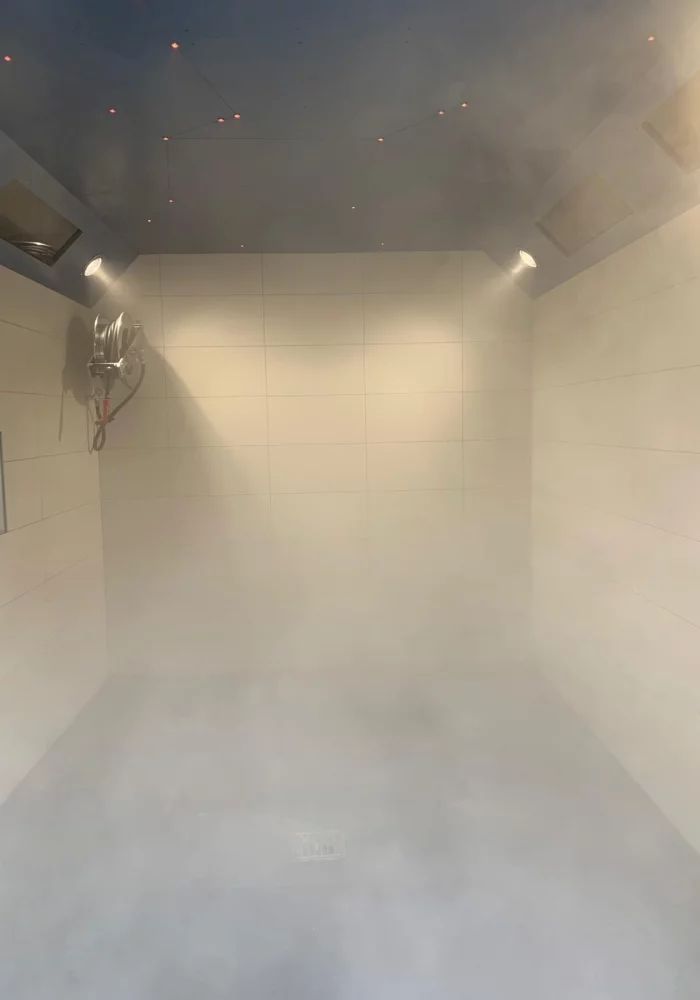
01 · Saline nebulization for horses — without a mask A saline mist diffused around the horse.
01Dead Sea brine
Moisturize. Thin. Help clear.
Saline nebulization diffuses an ultra-fine mist throughout the space to moisturize the airways, thin secretions and help mobilize them, with no nebulizer mask fitted to the horse.
01
Clear
Helping keep the airways clearer.
02
Thin
Making mucus easier to mobilize.
03
Soothe
Supporting comfort in case of irritation or coughing.
The difference: Dead Sea brine, not just salt water
The choice of brine matters. EQUANDLAB uses OXYGEN Dead Sea brine, 100% natural, free of microplastics and naturally rich in minerals. Beyond moisturizing and thinning secretions, its mineral composition has also been studied in relation to limiting inflammation linked to oxidative stress,supporting blood circulation and skin comfort, particularly for horses prone to dermatitis, summer eczema or irritation.
Is this the same as salt therapy for horses?Not exactly. “Salt therapy for horses” often refers to dry-salt halotherapy. EQUANDLAB uses saline nebulization: an ultra-fine aerosol produced from Dead Sea brine and diffused throughout the respiratory space.
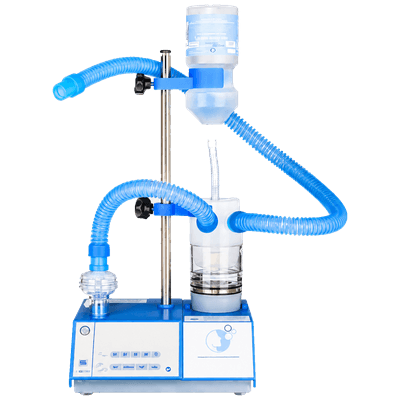
The deviceOxygenConcept Ultrasonic Inhaler
Installed outside the horse's area. Sealed bottle. Closed-loop system. No decanting.
02Oxygen-enriched air
More oxygen available with every breath.
The concentrator acts on the air breathed. Depending on the space's configuration, EQUANDLAB reports an ambient concentration reaching approximately 27% O₂, compared with around 21% in ambient air.
01
Enrich
Increase the oxygen content of the air during the session.
02
Preserve
Studies in Thoroughbreds link higher inspired O₂ to better preservation of blood oxygenation during exercise.
03
Complement
Add a distinct action to the mist on the air breathed.
More about normobaric oxygen therapy
Normobaric oxygen therapy: air is enriched with oxygen at normal atmospheric pressure, without a hyperbaric chamber. The concentrator delivers approximately 9 L/min; the concentration obtained depends notably on the volume, airtightness and air renewal.
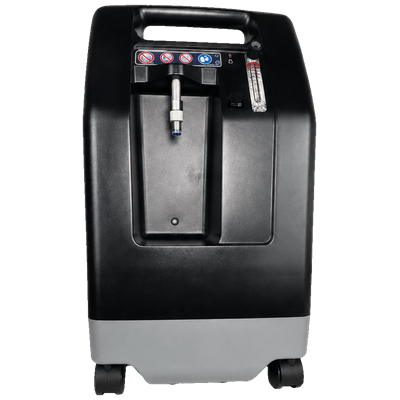
The deviceOxygen concentrator
It stays outside the horse's area and enriches the air during the session.
Ambient air≈ 21 %→up to 27%** depending on space configuration
Richer air around the horse.

20 millionnegative ions / second
03 · Negative ionizationIonized air, like at the base of a waterfall.
03Negative ionization
Helping certain particles leave the air.
The principle: charge certain particles present in the air, encourage them to cluster, then settle on surfaces so they remain suspended for less time.
01
Charge
Certain particles present in the air.
02
Cluster
Encourage their agglomeration.
03
Settle
Reduce the time they remain suspended before cleaning.
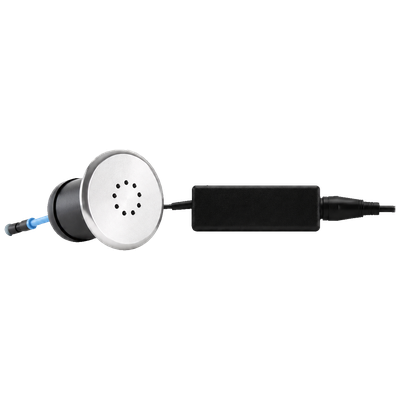
The deviceOxygenConcept Ionizer
Nine ionizing needles. Paired with the oxygen concentrator.
Up to +40%Combining oxygen and ionization is reported to boost overall endurance capacity by up to 40%. Read the article ↗
More about ionization and the “waterfall” comparison
The manufacturer states up to 20 million negative ions per second. EQUANDLAB compares this ionization to certain naturally ion-rich environments, such as the base of a waterfall.
| At the base of a waterfall | 50,000 /cm³ |
|---|---|
| In the high mountains | 5,000 to 10,000 |
| In the countryside | 500 to 1,000 |
| In a closed or air-conditioned stall | 0 to 10 |
04 · In your stable
10 to 13 m³
You may already have your future Respiratory Care Room.
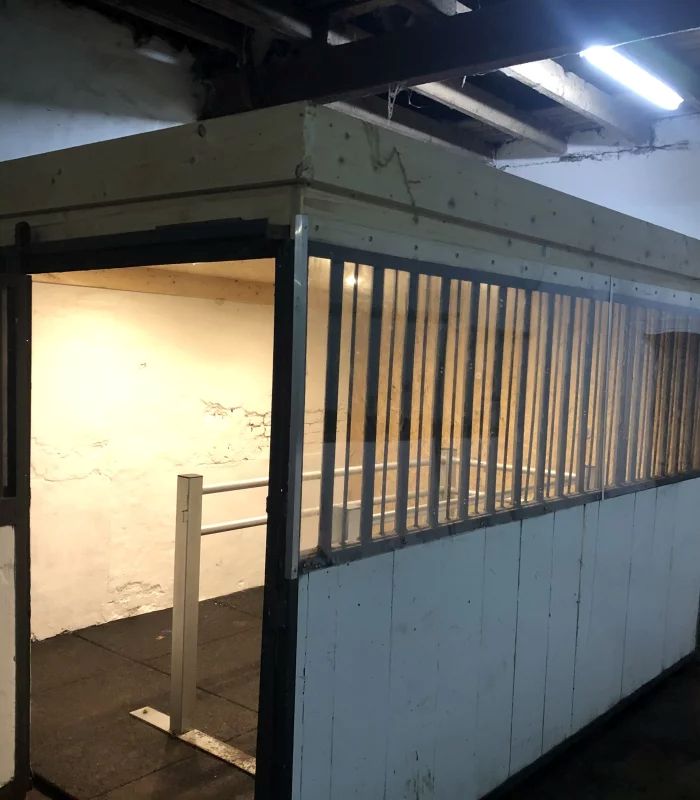
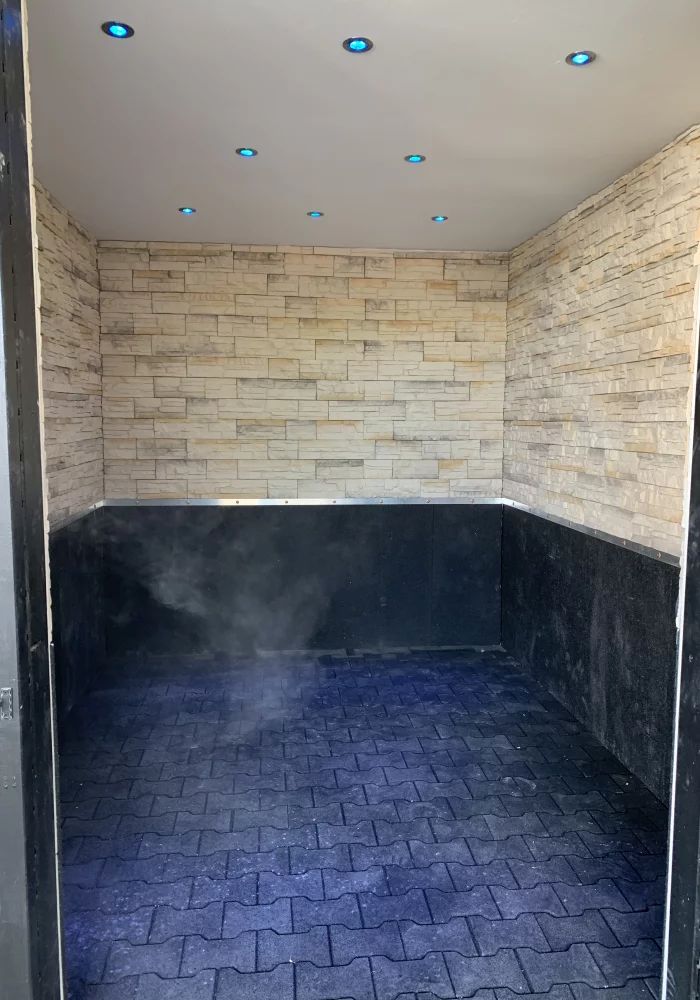
The back of a stall, a stall itself, a former shower or an existing room: the starting point depends on your building. A mask-free horse inhalation space can therefore be created within an existing space — enough room for the horse, compact enough to concentrate the action of the three technologies. EQUANDLAB works with you on adapting it to your space.
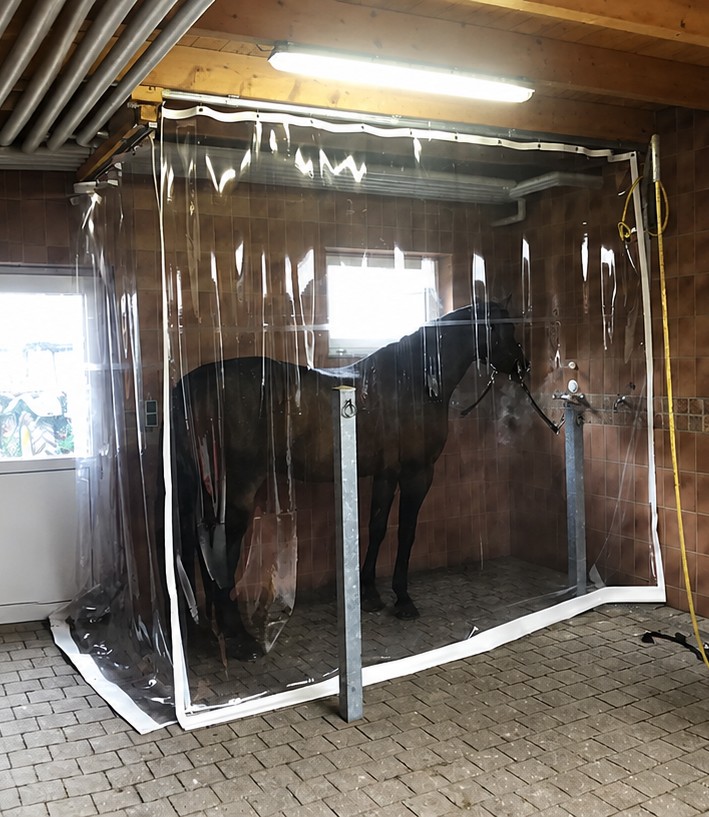
Why size the space?
- 01Identify
Locate the spot and note its dimensions.
- 02Delimit
A flexible partition is enough to create the 10 to 13 m³ session zone.
- 03Equip
The devices stay outside the horse's area; only the ducts diffuse the mist into the space.
View the full installation guide ↗
In the stable day
Indicative durations, depending on protocol and supervision.- Before≈ 8minPrepare
Devices, tank, horse entry.
- During30–45minThe horse breathes
Head free, with appropriate supervision.
- After≈ 10minReset
Exit, wipe-down, ventilation and check.
- ThenNext horse
The space stays set up. A new session starts after reset.
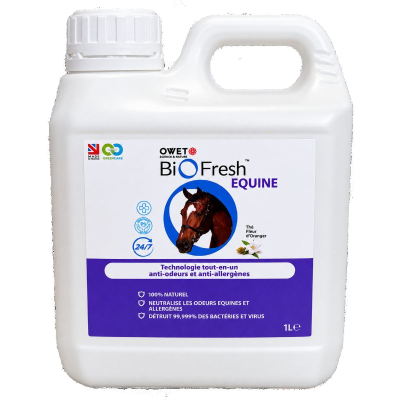
BioFresh can complete the hygiene protocol.
The plus: one action for two key zones — the Respiratory Care Room and the stalls — to round out environmental hygiene and daily odor management.
05 · Field case · Racehorses
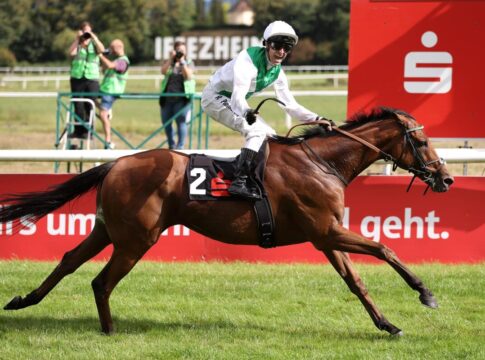
From training to the return from the track, breathing is part of daily care.
In peak conditionBuild the session into preparation, before work or a race. After the postSupport recovery and monitor breathing after exertion. Next engagementKeep the horse working in good condition and prepare what comes next.
Bleeding / EIPH: a respiratory issue specific to racehorses, to be followed with the vet.
Already in racing stables RTC and Rennstall Recke already use the system daily.
“RTC integrates inhalation into the daily routine of its racehorses.”Sarah Steinberg · RTC Rennpferde Trainings-Center GmbH · testimonial collected by the manufacturer
06 · Respiratory Care Room
The shared space stays drug-free.
Brine, oxygen-enriched air and negative ionization: no medication is nebulized in the shared Respiratory Care Room.
Drug-free · Non-doping
Shared use · several horses Drug-free. Brine · oxygen-enriched air · negative ionization
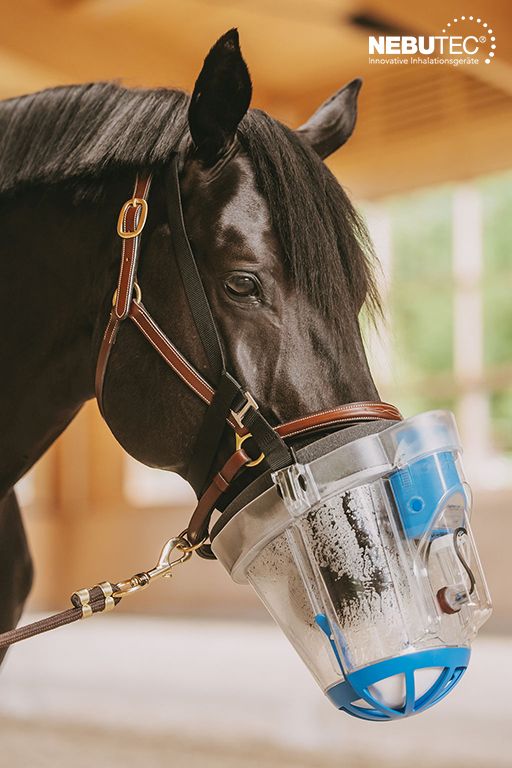
07 · EQUINE NEBULIZER SYSTEM · PRICE & EQUIPMENT
An investment for the whole string, not for a single horse.
The same Respiratory Care Room can serve several horses, day after day, without multiplying equipment.
And if your setup allows, it can also become a billable service for boarders or outside horses.
The price, at the scale of your stable
A shared investment.
What if you looked at it per session?
A Respiratory Care Room isn't an expense per horse. It's equipment the whole stable uses, session after session.
Ten horses, one session a week each: 2,600 sessions over five years. The €12,050 of equipment is spread across each one.
10 horses1 session / week / horse5 years
What remains: brine consumed,fit-out of your space and replacement accessories beyond the first six months. Three items that depend on your building and session length: we cost them with you during the survey.
Equipment, per session €4.63 per session, per horse
Over 5 years, with 10 horses€12,050 excl. VAT spread over 2,600 sessions.
Calculation: €12,050 excl. VAT ÷ 2,600 sessions, i.e. 10 horses × 52 weeks × 5 years. Equipment only. Excluding brine consumed, fit-out of the space, accessories beyond the 6 months included, maintenance, energy, staff and financing.
Equipment
Three items. One installation.
01 · Nebulization
Mask-free equine ultrasonic nebulizer
The brine mist is diffused into the space, with no device fitted to the muzzle.
€3,350 excl. VAT€4,053.50 incl. VAT
View product 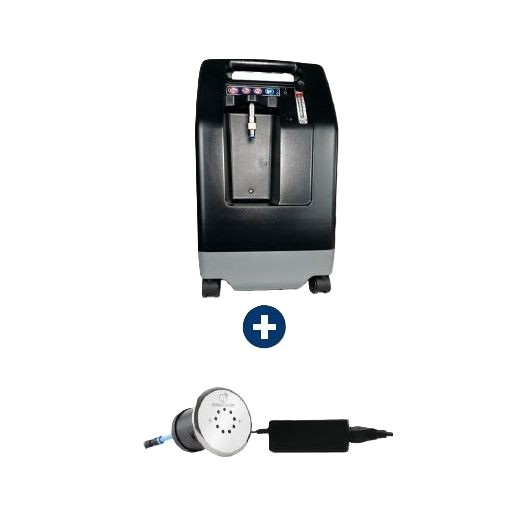
02 · Oxygen + ionization
Oxygen concentrator and OxygenConcept Ionizer
The oxygen flow and negative-ion module. The ionizer is included.
€8,700 excl. VAT€10,527.00 incl. VAT
View product 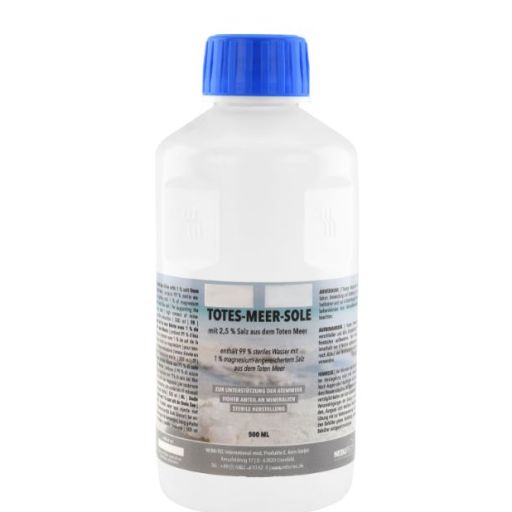
03 · Consumable · restock
Dead Sea brine 2.5%
The product diffused in the zone is restocked according to your session frequency and length.
€19.12 excl. VAT / liter€23.14 incl. VAT
View product View exact delivery contents
Saline nebulization
What you need to start.- 1× ultrasonic nebulizer
- 1× liter of Dead Sea brine
- 1× bacterial filter
- 1× 40 cm silicone tube + 1× 100 cm
- 1× liter of distilled water
- 1× transfer system / tubing
- 1× cap for the transfer system
- 1× Kendall system
- 1× user manual
Oxygen + ionization
The zone's equipment.- 1× OXYGEN oxygen concentrator
- 1× OxygenConcept Ionizer
- Power cable up to 20 m
- 1× user manual
6-month accessory pack
First replacement parts.- 6× bacterial filters
- 6× impurity filters
- 2× bottle adapters
- 2× nebulization chambers
- 2× caps for nebulization chamber
08 · EQUANDLAB support
A project sized with an equine veterinarian.
Dr Bernard Stoffel oversees the sizing, installation, commissioning and follow-up of your Respiratory Care Room.

Your contact
Dr Bernard Stoffel
Equine veterinarian, breeder and founder of EQUANDLAB
You don't just leave with three machines and a manual. Bernard follows the project from A to Z: sizing, installation, equipment, commissioning and follow-up.
A comprehensive respiratory approachThe Room fits into the stable's wider respiratory care: air quality, forage, dust control, ventilation and veterinary oversight.
About Dr Bernard Stoffel → To get startedSpace dimensions, number of horses and stable organization.
Sources & referencesView sources
For those who want to go further: institutional sources on equine respiratory health, veterinary literature and technical documents related to the EQUANDLAB concept.
IFCE · Equipedia Equine asthma: signs, environment and performance Institutional source ↗ IFCE · Equipedia Stable ventilation and air quality Institutional source ↗ Veterinary literature EIPH / bleeding in the equine athlete Scientific consensus ↗ Equi-Infos Normobaric oxygen therapy in horses Read the EQUANDLAB article ↗ Equi-Infos Negative ionization: mechanism and reported data Read the EQUANDLAB article ↗ Technical guide Sizing and installation of the space View the guide ↗
Technical review Dr Bernard Stoffel, equine veterinarian and founder of EQUANDLAB. See his role in the project ↑
09 · Frequently asked questions
The questions that matter before creating your space.
The most useful answers first. More technical questions are available just below.
What is the difference between an equine nebulizer, a nebulizer mask and the EQUANDLAB Respiratory Care Room?
An equine nebulizer produces the saline aerosol. A nebulizer mask delivers it directly around the muzzle, while an inhalation room diffuses it into a dedicated space. The EQUANDLAB Respiratory Care Room adds two distinct actions to saline nebulization: oxygen-enriched air and negative ionization.
How much does the EQUANDLAB equine nebulizer system cost?
The complete system is priced at €12,050 excl. VAT, excluding fit-out of the space. It includes saline nebulization, oxygen-enriched air, negative ionization, a site survey and a six-month accessory pack.
Is saline nebulization the same as salt therapy for horses?
Not exactly. “Salt therapy for horses” often refers to dry-salt halotherapy. EQUANDLAB uses saline nebulization: an ultra-fine aerosol produced from Dead Sea brine and diffused throughout the respiratory space.
Why plan for a space of about 10 to 13 m³?
This sizing aims to keep the zone compact enough to limit dilution of the mist, oxygen and ionization, while leaving enough room for the horse to keep its head free. Final sizing depends on the existing building.
How many horses can use the same installation?
The space is designed to be used horse after horse. Daily capacity depends on session length, reset time between horses and the stable's organization.
When should a session be scheduled around training or competition?
The session can be built into training and recovery periods. Timing, frequency and length depend on the goal sought, the horse concerned and the protocol chosen by the facility.
Can the space be used for a horse that coughs, is asthmatic, has heaves or shows bleeding?
These situations don't all share the same cause or severity. The Respiratory Care Room fits into ongoing respiratory management at the stable but doesn't replace veterinary diagnosis or follow-up. Suspected asthma, heaves or EIPH/bleeding should be medically evaluated.
What maintenance and after-sales support should be planned?
Regular use involves following up the zone, filters, nebulization chambers, tubing and other consumables. EQUANDLAB remains your contact for adjustments, parts, maintenance and liaison with the manufacturer after commissioning.
See the 9 other questionsHow it works, brine, oxygen, ionization, installation, medication…Open
What is an equine nebulizer and how does the EQUANDLAB Respiratory Care Room differ?
The EQUANDLAB Respiratory Care Room is a mask-free equine nebulizer space set up in the stable. Within a space sized to about 10 to 13 m³, it combines saline nebulization, oxygen-enriched air and negative ionization while the horse remains head-free.
How does mask-free equine nebulization work?
The saline mist is diffused into a dedicated space rather than through a nebulizer mask fitted to the horse's head. The horse stays free in its position and breathes the air in the zone during the session. The space can then be used by another horse after reset.
What is Dead Sea brine saline nebulization for?
The ultra-fine saline mist aims to moisturize the airways, thin secretions and help the horse mobilize them. EQUANDLAB uses a brine sourced from the Dead Sea, diffused as an aerosol throughout the space.
What is the oxygen-enriched air in the EQUANDLAB Room for?
The concentrator increases the amount of oxygen available in the air breathed during the session. Depending on the space's configuration, EQUANDLAB reports an ambient concentration reaching approximately 27% O₂, compared with around 21% in ambient air.
What is negative ionization for in a respiratory space for horses?
Negative ionization acts on certain particles present in the air: it aims to charge them electrically, encourage clustering, then settle on surfaces, so they remain suspended for less time before the zone is cleaned.
Why combine nebulization, oxygenation and ionization in the same space?
Because the three technologies don't share the same function. Nebulization acts on the mist and secretions, oxygenation changes the oxygen content of the air breathed, and ionization acts on certain suspended particles. EQUANDLAB brings them together in a single session rather than limiting the space to saline inhalation alone.
Can the Respiratory Care Room be created in an existing stall or building?
Yes, depending on configuration. The back of a stall, a stall itself, a former shower or an existing room can serve as a starting point. The devices stay outside the horse's area, and only the necessary ducts cross the partition.
Does the EQUANDLAB Room use medication, and is it non-doping?
The shared space is used with brine, oxygen-enriched air and negative ionization, with no medication nebulized in the shared zone. EQUANDLAB presents it as a drug-free, non-doping solution for sport facilities.
What if a horse needs inhaled medication?
Treatment then becomes individual. EQUANDLAB offers a dedicated inhaler such as the SaHoMa II: one horse, one treatment, one individual device with silent Mesh technology.
Your project
Your stable is different. The installation should be too.
The dimensions of the proposed space, the number of horses and your stable organization are enough to start assessing what is feasible.
Site survey included · No commitment · Just a few details to get started
Go further
Complete the routine around your Respiratory Care Room.
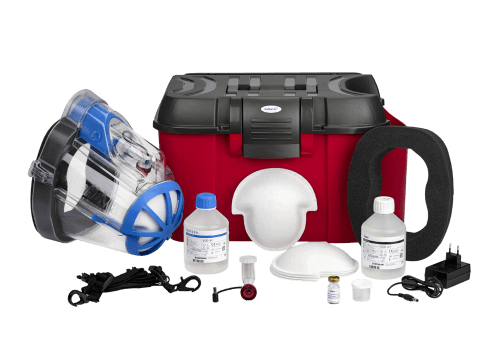 Individual medication treatment SaHoMa®-II
 When medication needs to be inhaled, treatment remains individual. A separate solution from the shared respiratory space.
See SaHoMa®-II →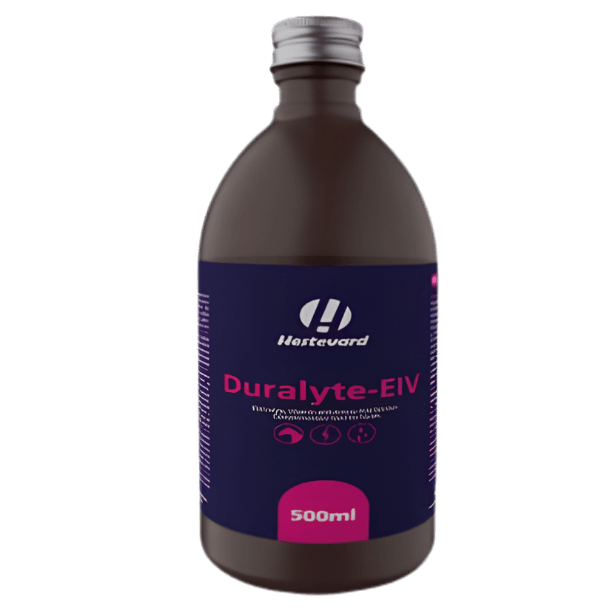 Electrolytes & rehydration Duralyte EIV
 Complete the routine after exercise or transport with electrolytes.
See Duralyte EIV →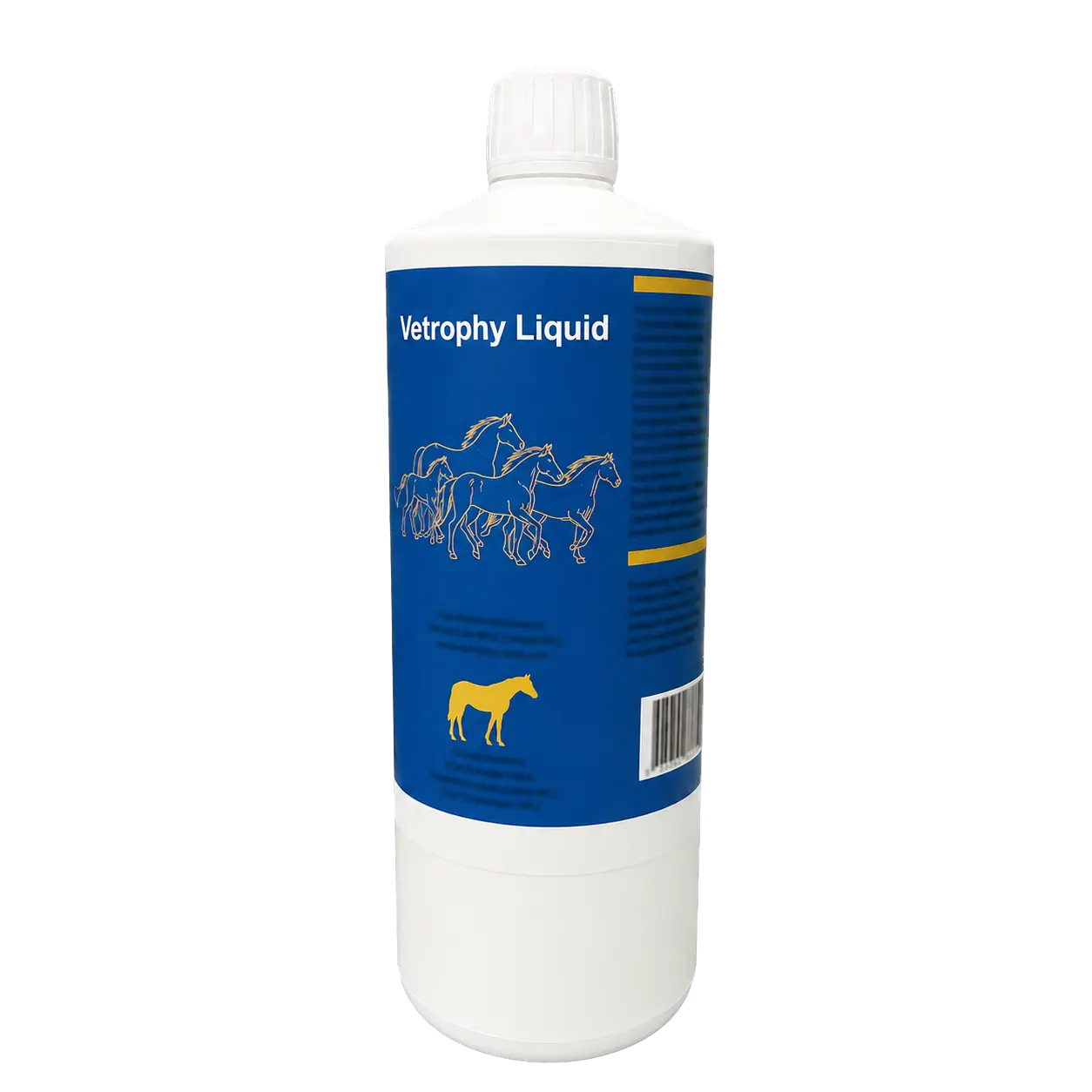 Exercise & recovery Vetrophy®
 Support periods of exercise and recovery within the horse's nutritional routine.
See Vetrophy® → Stable environment Equine BioFresh Complete the routine with an action dedicated to the horse's environmental hygiene.
See Equine BioFresh → Understand the technology Air ionizationUnderstand the principle of negative ionization and its action on certain airborne particles.
Read the article → Hygiene All hygiene productsExplore EQUANDLAB solutions for stable, equipment and horse-environment hygiene.
View products →